Thursday, July 6, 2023

EPA Proposes Updates to Greenhouse Gas Emissions Reporting Requirements for the Oil and Gas Sector

WASHINGTON – Today, the U.S. Environmental Protection Agency (EPA) issued a proposal to amend reporting requirements for petroleum and natural gas systems under EPA’s Greenhouse Gas Reporting Program. The proposed revisions would improve the accuracy of reported emissions of greenhouse gases (GHG), including methane, one of the primary drivers of the climate crisis, from applicable petroleum and natural gas facilities, consistent with the Methane Emissions Reduction Program under the Inflation Reduction Act. 

“The Biden-Harris Administration is moving urgently to reduce climate pollution, and EPA is working to ensure science leads the way with the most accurate emissions data possible,” said Joseph Goffman, Principal Deputy Assistant Administrator for EPA’s Office of Air and Radiation. “The proposed revisions to EPA’s Greenhouse Gas Reporting Program will leverage advancements in technology to produce high-quality, long-term data for emitters, contributing important insights into emissions trends as we work to protect people and the planet.”

EPA’s proposed amendments to subpart W of the GHG reporting program would address gaps in the total methane emissions reported by facilities by adding several new covered sources such as “other large release events,” which would capture abnormal methane emission events that are not fully accounted for using existing methods. These changes to address gaps in emissions reporting will improve and advance a key program that underpins President Biden’s ambitious climate agenda.

The amendments would also add new or revise existing calculation methodologies to improve the accuracy of reported emissions data for methane and other greenhouse gases and incorporate additional empirical data; include the use of new technologies such as remote sensing for quantifying emissions from other large release events; and collect data at a more granular level to improve verification and transparency of the data collected. In addition, EPA is proposing determinations to establish whether data submitted to the Agency under the proposed revisions would be entitled to confidential treatment.

EPA is proposing that most revisions would become effective on January 1, 2025, and that reporters would implement most of the changes beginning with reports prepared for the 2025 reporting year and submitted by March 31, 2026. EPA will take comment on these proposals for 60 days after publication in the Federal Register. For more information about this action, please visit the  GHG Reporting Program Rulemaking Resources web page.

Background on the Methane Emissions Reduction Program in the Inflation Reduction Act

Section 60113 of the Inflation Reduction Act amends the Clean Air Act and directs EPA to impose and collect a charge on methane emissions that exceed certain waste emissions thresholds. The law requires that EPA revise the requirements of subpart W to ensure the reporting is based on empirical data, accurately reflects the total methane emissions (and waste emissions) from the applicable facilities, and allow owners and operators of applicable facilities to submit empirical emissions data to demonstrate the extent to which a charge is owed.

This proposal is about improving the methane emissions data reported to the agency.  EPA expects to release a separate proposed rule relating to implementation of the waste emissions charge in fall 2023. On June 30, the EPA and U.S. Department of Energy announced a partnership to provide more than $1 billion in funding from President Biden’s Investing in America agenda to help reduce wasteful methane emissions from the oil and gas sector.

Background about Greenhouse Gas Reporting Program Requirements for Petroleum and Natural Gas Sector

The GHG Reporting Program requires reporting of greenhouse gas (GHG) data and other relevant information from large GHG emission sources, fuel and industrial gas suppliers, and CO2 injection sites in the United States. Approximately 8,000 facilities are required to report their emissions annually, and the reported data are made available to the public in October of each year.

Under Subpart W of the GHG Reporting Program, owners or operators of facilities that contain petroleum and natural gas systems and emit 25,000 metric tons or more of GHGs per year (expressed as carbon dioxide equivalents) report GHG data to EPA. Owners or operators collect GHG data; calculate GHG emissions; and follow the specified procedures for quality assurance, missing data, recordkeeping, and reporting. Subpart W consists of emission sources in ten segments of the petroleum and natural gas industry.

Learn more about greenhouse gas reporting requirements for petroleum and natural gas systems.


from EPA News Releases https://ift.tt/H8LuWGl
Wednesday, July 5, 2023

EPA Region 7 Extends Call for Abstracts Deadline for Anaerobic Digestion on the Farm Conference

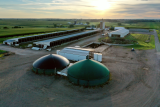
Photo of anaerobic digesters at facility

LENEXA, KAN. (JULY 5, 2023) – The U.S. Environmental Protection Agency (EPA) Region 7, Iowa State University, and the University of Iowa have extended the deadline to submit abstracts for their upcoming Anaerobic Digestion on the Farm Conference to July 21, 2023.

EPA and the universities invite experts interested in speaking at the conference to submit presentation proposals via a Call for Abstracts. Abstracts discussing a broad spectrum of anaerobic digestion topics are welcome; presenters may submit abstracts for presentations, demonstrations, panels, and posters. Sessions may be designated for beginner, intermediate, or advanced audiences. Information on submitting an abstract is available at the link above and on EPA’s conference page.

EPA and the universities will host the conference, titled “Anaerobic Digestion on the Farm: Optimizing environmental and economic outcomes for rural communities and beyond,” on Nov. 6-8, 2023, at the Scheman Building at the Iowa State Center in Ames, Iowa.

In addition to presentations, exhibits, panel sessions, and virtual tours of anaerobic digestion facilities, the conference will feature several keynote speakers, including Rudi Roeslein and Marcelo Mena-Carrasco. Additional information regarding the upcoming conference is available on EPA’s conference page.

# # #

Learn more about anaerobic digestion

Learn more about EPA Region 7

View all Region 7 news releases

Connect with EPA Region 7 on Facebook

Follow us on Twitter: @EPARegion7


from EPA News Releases https://ift.tt/IWZ0f2u

Monday, July 3, 2023

EPA Fines Nine Springfield Missouri Home Renovators for Lead-Based Paint Violations

LENEXA, KAN. (JULY 3, 2023) – Nine home renovation companies in Springfield, Missouri, have agreed to pay over $30,000 collectively in penalties to the U.S. Environmental Protection Agency (EPA) to resolve alleged violations of the federal Toxic Substances Control Act (TSCA). 

According to EPA, the following companies failed to comply with regulations intended to reduce the hazards of lead-based paint exposure during renovations:


  • ServPro of Springfield/Greene County
  • Inside and Out Building and Remodeling LLC
  • Top Tier Homes LLC
  •  A.M. Wyssmann LLC
  •  Martin Remodeling and Investments LLC
  • Scott Builders LLC
  • Autumn Exteriors LLC
  • LR Remodeling LLC
  • The Gutter Experts LLC 

“Reducing exposure to lead-based paint – especially among children and pregnant women, and in communities already overburdened with pollution exposure – is a top priority for EPA,” said David Cozad, director of EPA Region 7’s Enforcement and Compliance Assurance Division. “The Agency is committed to ensuring that home renovators follow the law and protect workers and residents from lead exposure.” 

EPA discovered violations of the lead-based paint regulations during inspections conducted in Springfield last year and determined that most of the properties being renovated were in communities already affected by pollution exposure. EPA is strengthening enforcement in such communities to address disproportionately high, adverse human health or environmental effects on vulnerable populations. 

Companies that perform home renovations or hire subcontractors to perform renovations on pre-1978 housing are required to comply with regulations under EPA’s Lead Renovation, Repair, and Painting Program. The regulations include requirements to train employees in proper work practices; obtain certification from EPA prior to performing renovations; as well as compliance with lead safety practices, records retention, and notification to homeowners about the hazards of renovation-related lead exposure. 

Reducing childhood lead exposure and the associated health impacts is a top priority for EPA. Lead-contaminated dust from chipped or peeling lead-based paint in homes built prior to 1978 is one of the most common causes of elevated blood lead levels in children. Infants and children are especially vulnerable to lead-based paint exposure because their growing bodies absorb more lead than adults do, and their brains and nervous systems are more sensitive to the damaging effects of lead. They can be exposed from multiple sources and may experience irreversible and lifelong health effects. Lead dust can be generated when lead-based paint deteriorates or is disturbed by renovation work, such as window installation, demolishing painted surfaces such as walls or porches, and scraping and repainting of homes. 

Please visit these EPA websites for additional information about lead-based paint: 

Apply for, or update, your renovation firm’s lead-safe certification. 

Locate certified renovation and lead dust sampling technician firms. 

Report lead-based paint complaints, tips and violations. 

# # # 

Learn more about EPA Region 7

View all Region 7 news releases

Connect with EPA Region 7 on Facebook

Follow us on Twitter: @EPARegion7


from EPA News Releases https://ift.tt/Btg16k5

$10 Million Grant Opportunity to Enhance Environmental Justice in New England Communities

BOSTON (July 3, 2023) – The U.S. Environmental Protection Agency's (EPA's) Region 1 Office is announcing a grant competition for an "Environmental Justice Thriving Communities Technical Assistance Center" (EJ TCTAC) to help New England communities and other environmental justice stakeholders access federal technical assistance and resources to address environmental and energy justice concerns. EPA Region 1 includes the states of Connecticut, Maine, Massachusetts, New Hampshire, Rhode Island, Vermont, and 10 Tribal Nations.

In April of this year, the agency announced $177 million in investments for the creation of EJ TCTACs across the country to help underserved and overburdened communities access funds from President Biden's Investing in America agenda, including historic investments to advance environmental and energy justice. Under this new Region 1 grant opportunity, EPA will again partner with the U.S. Department of Energy to build upon and complement the initial EJ TCTAC effort by focusing on delivering technical assistance specifically within the six New England states and 10 Tribal Nations.

"I am thrilled at this grant opportunity to have a technical assistance resource center specifically to serve New England communities as they work to tackle environmental justice concerns," said EPA New England Regional Administrator David W. Cash. "New England has many forward-thinking people and organizations, and we recognize that many of our communities have solutions to the environmental challenges they face but haven't received the resources needed to produce results. Having a New England technical assistance center will help build capacity and access federal funding to advance environmental justice across the region."

EPA Region 1 intends to issue a Notice of Funding Opportunity (NOFO) for the Region 1 EJ TCTAC by the end of July 2023, and will be seeking applications from eligible entities interested in serving as the Region 1 EJ TCTAC. After the NOFO is issued, EPA Region 1 will provide links to recordings of past trainings and other resources for applicants including frequently asked questions which will be updated based on additional questions received. Further information will be included in the NOFO and will be posted on EPA's website and www.grants.gov. Until an EJ TCTAC grant is awarded through this upcoming grant competition and begins providing technical assistance to New England communities, communities will be able to access assistance through one of the designated national EJ TCTACs.

Background

Once awarded, the EPA Region 1 EJ TCTAC will be part of the network of the other EJ TCTACs providing technical assistance on a comprehensive nation-wide basis. With these critical investments, the EJ TCTACs will provide training and other technical assistance to community groups, nonprofits, local governments, and others to build capacity for navigating federal, state and private grant application systems, writing strong grant proposals, and effectively managing grant funding.

In addition, these EJ TCTACs will provide guidance on engagement in governmental processes, community outreach, meeting facilitation, and translation and interpretation services for limited English-speaking participants, removing barriers and improving accessibility for communities with environmental justice concerns. Each of the EJ TCTACs will also create and manage communication channels to ensure the communities they serve have direct access to resources and information.

Process

EPA Region 1 anticipates issuing the NOFO for the Region 1 EJ TCTAC by the end of July, 2023, having the competition open for 60 days, and plans to make the award by the end of the calendar year. The award amount will be approximately $10 million for a five-year project period, up to $2 million for each year.

Eligible applicants who can compete under the NOFO will generally include:

  • Public and private universities and colleges and other nonprofit institutions of higher education such as community colleges
  • Public and private nonprofit institutions/organizations (including philanthropic organizations)
  • Intertribal Consortia – a coalition between two or more Indian tribal governments authorized by the governing bodies of those tribes to apply for and receive assistance and participate in self-governance.

    Entities that have been awarded EJ TCTAC funding will not be eligible to apply for this opportunity. Further details will be in the NOFO.

The formation of the EJ TCTACs is in direct response to feedback from communities and environmental justice leaders who have long called for technical assistance and capacity building support for communities and their partners as they work to access critical federal resources. For more information on the EJ TCTACs please visit: EJ Thriving Communities Technical Assistance Centers program.

The EJ TCTAC program is part of the Federal Interagency Thriving Communities Network and delivers on the Biden-Harris Administration's Justice40 Initiative to ensure that 40% of the benefits of certain federal investments flow to disadvantaged communities. The new EJ TCTACs will help ensure communities with environmental and energy justice concerns can access President Biden's historic investments in America to address generational disinvestment, legacy pollution, infrastructure challenges, and build a clean energy economy that will lower energy costs, strengthen our energy security, and meet our climate goals.

Learn more about Environmental Justice at EPA


from EPA News Releases https://ift.tt/M4zNvDm