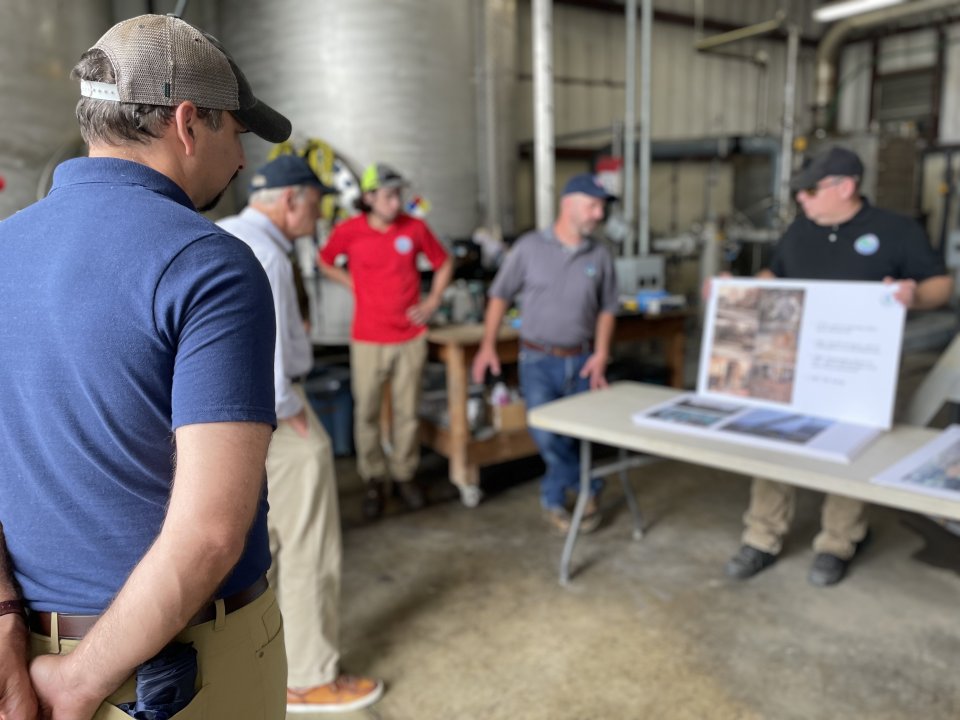
LENEXA, KAN. (JUNE 27, 2023) – An EPA on-scene coordinator (OSC) and contractors have begun the removal assessment phase at HPI Products Inc. facilities in St. Joseph, Missouri.
During this phase, EPA will oversee the organization and categorization of thousands of containers of potentially hazardous, non-hazardous, and uncharacterized wastes stored at HPI’s facilities. The inventory and assessment of these containers is an essential step in determining the threats that the containers’ contents may pose to the community and the environment and the next steps to address those containers.
In the past, inspectors from EPA and the Missouri Department of Natural Resources (MoDNR) discovered rusted and leaking containers at HPI’s facilities and observed that the buildings themselves were dilapidated, partially collapsed, or in danger of collapse, and are located in overburdened communities.
Read moreabout EPA’s enforcement history at HPI Products Inc.
DALLAS, TEXAS (June 27, 2023) – The U.S. Environmental Protection Agency (EPA) joined the North American Development Bank (NADBank) and Rep. Veronica Escobar (TX-16) to celebrate a completed water infrastructure project and Brownfields funding for the village of Vinton in El Paso County, Texas. The village is receiving a $2 million EPA Brownfields cleanup grant financed through the Bipartisan Infrastructure Law, part of the Biden-Harris Administration’s Investing in America agenda.
“Water infrastructure and contamination cleanups often come with expenses too large for some communities to bear. Federal funding can make all the difference to help local governments provide these investments for their residents,” said EPA Regional Administrator Dr. Earthea Nance. “Through legislation like the Bipartisan Infrastructure Law, the Biden-Harris Administration is ensuring that more funding for infrastructure, cleanups, and other important projects get to the communities that need them the most.”
“Just a month ago, most of us were here in El Paso County to break ground for the construction of basic, but vital services for another community and today, we’ve come together again to witness the outcome of yet another collaboration among NADBank, EPA, USDA and TWDB, which is making these projects possible for small communities like Vinton,” stated NADBank Deputy Managing Director John Beckham. He added that “NADBank will continue to build these relationships in benefit of the people and environment of the U.S.-Mexico border region.”
The village celebrated the completion of its wastewater distribution system, which will bring piping, fire hydrants and service meters to 368 households for the first time. Speakers at the event also announced the final phase of a wastewater collection system will start construction in July and connect 506 homes to wastewater collection services for the first time. Both projects were funded through an EPA grant to NADBank of $4.9 million, and additional funding from the U.S. Department of Agriculture Rural Development program and Texas Water Development Board.
The village of Vinton’s Brownfields cleanup grant, funded by the Bipartisan Infrastructure Law, will be used to clean up the Vinton Community Park site. The site was used to dispose to waste such as shredded automobile components; metal pieces; and gravel, concrete pipe, and other construction debris. As a result, the site is contaminated with hazardous substances with commingled petroleum in some areas. The site has been vacant since the Village purchased it in 1992. Grant funds also will be used to conduct community outreach activities.
These Brownfields grants are part of President Biden’s Investing in America Agendato grow the American economy from the bottom up and middle-out – from rebuilding our nation’s infrastructure, to driving over $470 billion in private sector manufacturing and clean energy investments in the United States, to creating a manufacturing and innovation boom powered by good paying jobs that don’t require a four-year degree, to building a clean-energy economy that will combat climate change and make our communities more resilient.
Thanks to the historic $1.5 billion boost from President Biden’s Bipartisan Infrastructure Law, EPA’s Brownfields Program is helping more communities than ever before begin to address the economic, social, and environmental challenges caused by brownfields and stimulate economic opportunity, and environmental revitalization in historically overburdened communities.
The EPA’s Brownfields Program also advances President Biden’s Justice40 Initiative to direct 40 percent of the overall benefits of certain Federal investments to disadvantaged communities. The Brownfields Program strives to meet this commitment and advance environmental justice and equity considerations into all aspects of its work. Approximately 84 percent of the MARC program applications selected to receive funding proposed to work in areas that include historically underserved communities.
Connect with the Environmental Protection Agency Region 6 onFacebook,Twitter, or visit ourhomepage.
EPA and Senator Carper join DNREC for visit to Standard Chlorine Superfund Site in New Castle, DE
New Castle, DE – During a visit to Delaware this week, EPA Deputy Administrator Janet McCabe joined Regional Administrator Adam Ortiz, U.S. Senator Tom Carper (D-Del.), and Delaware Department of Natural Resources and Environmental Control
(DNREC) Secretary Shawn Garvin at the Standard Chlorine Superfund site in New Castle, Delaware. The Superfund Site benefitted from $1 million in Bipartisan Infrastructure Law funding toward its ongoing remediation.
“It was an honor to join Senator Carper and Secretary Garvin yesterday in New Castle, Delaware to see firsthand the benefits of President Biden’s Investing in America Agenda and the progress that has been made in cleaning up the Standard Chlorine Superfund site,” said Deputy Administrator Janet McCabe. “Investments like the ones we are making right here in Delaware are helping us continue to build momentum toward ensuring that the communities living near these sites get the public health and environmental protections they deserve.”
"EPA’s Superfund program is not only responsible for cleaning up the past, but also for cleaning up for the future,” said EPA Mid-Atlantic Regional Administrator Adam Ortiz. “These contaminated sites are hurting our local economies and holding back some of our most vulnerable communities. Thanks to historic bipartisan infrastructure investments, these sites continue to move closer to being fully remediated and returned to productive use.”
During the visit, EPA and DNREC staff highlighted the response actions taken so far, including the removal of hazardous chemicals, decontamination and removal of equipment and piping, the installation of a groundwater extraction and treatment system, and a soil cap on a 25-acre portion of the site – all measures undertaken to prevent the migration of contamination off-site and to protect the surrounding environment and community.
“The Superfund program plays an important role in protecting communities from the health risks associated with legacy pollution,” said Senator Carper, Chairman of the Senate Environment and Public Works Committee. “Thanks to our historic investments in the Bipartisan Infrastructure Law, EPA has more resources to remove the harmful pollutants present at sites like Standard Chorine in New Castle, Delaware. I am pleased that Deputy Administrator McCabe and Regional Administrator Ortiz joined me in touring this Superfund site and seeing firsthand how this EPA grant is benefiting the First State.”
Standard Chlorine of Delaware is a 65-acre Superfund site located three miles northwest of Delaware City that manufactured chlorinated benzene compounds for nearly 40 years. Chlorobenzenes from two spills in the 1980’s have been found in groundwater, soil, creek sediments, surface water and nearby wetlands. After being added to the National Priorities List in 1987, EPA and DNREC took over control of the site in 2002 after the owner closed and abandoned the plant and declared bankruptcy.
“DNREC’s remediation work cleaning up former industrial sites to return them to productive use benefits all Delawareans, including underserved communities throughout the state,” said DNREC Secretary Shawn M. Garvin. “Our federal partners support this important work, most recently by providing funding from the Bipartisan Infrastructure Law that helps us continue our ongoing groundwater remedy work at the former Standard Chlorine of Delaware in New Castle County.”
Also this week, EPA officials visited Sussex County, DE with Senator Carper, DNREC, and the Nature Conservancy to announce more than $500,000 in clean water investments for the state – while addressing climate change impacts facing Delaware. The announcement took place in Cape Henlopen State Park, a location that will receive funds under the BEACH Act for continued water quality monitoring.
WASHINGTON -- Today, the U.S. Environmental Protection Agency (EPA) announced $50.4 million in annual funding to states and territories for communities most in need of access to clean and safe drinking water. The funding will support projects and activities in underserved, small and disadvantaged communities to access and invest in water infrastructure and comply with the Safe Drinking Water Act (SDWA).
“Across the country, too many communities struggle with accessing clean, safe water,” saidEPA Assistant Administrator for Water Radhika Fox. “These grants will invest in solutions that upgrade infrastructure, improve water reliability, and deliver safe drinking water to our most vulnerable communities. This grant, along with other funding from President Biden’s Bipartisan Infrastructure Law, will strengthen our nation’s water infrastructure and ensure everyone has access to clean, safe water.”
Grant funding can support a broad range of approaches to help communities address drinking water concerns, from household water quality testing to monitoring for unregulated drinking water contaminants. Funds may also support efforts to build the technical, financial, and managerial abilities of a water system’s operations and staff. Infrastructure projects—from transmission, distribution, and storage—that support drinking water quality improvements are also eligible for grant funding.
The Small, Underserved, and Disadvantaged Community grant program, established under the Water Infrastructure Improvements for the Nation (WIIN) Act, awards funding to states and territories on a non-competitive basis.EPA awards funding to states based on an allocation formula that includes factors for population below the poverty level, small water systems, and underserved communities. There is a 10% Tribal allotment.For more information, visit the WIIN SUDC Grant website.
FY23 WIIN Funding for Small, Underserved and Disadvantaged Community Grant